

The Advocate | Issue 378 | October 2026
Stay Informed with MGZ Employment Law's Monthly Newsletter
2026 General Election: The Employment Law Agenda
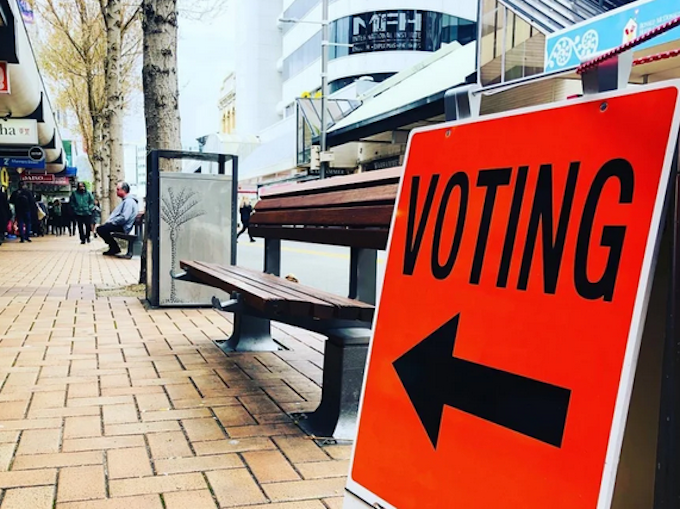
As the 2026 General Election approaches, political parties are presenting a wide range of policies for voters to consider. Below is a snapshot of some of the various political parties’ policies as they relate to employment and industrial relations, including new policies being proposed and what effect the 2026 General Election could have on the current landscape.
Of course to maintain our neutrality, we have set these out in alphabetical order.
NEW POLICY PROPOSALS
Act
- Establishing a new law to allow employers and employees to end employment by mutual agreement: The proposed new law would allow employers to offer an employee a specified payment to end employment by mutual agreement, regardless of whether or not a dispute existed between the parties.
- Reducing the timeframe to lodge claims in the Employment Relations Authority from three years from the date the personal grievance was raised to three months.
- Making payroll deductions for union fees voluntary.
Green Party
- Establishing a minimum age for formal employment.
- Making union membership opt-out rather than opt-in.
- Working towards a shorter working week.
- Establishing a minimum statutory entitlement to redundancy compensation. Currently redundancy compensation is purely contractual.
Labour
- Introducing an offence of corporate homicide.
- Providing a KiwiSaver contribution for parents on paid parental leave.
- Expanding the Apprenticeship Boost programme.
National
- Introducing a First Employee Support Package which will be offered to sole traders to take on their first employee. The support package will provide first-year guidance and there will be reduced penalties for ‘genuine first year administrative errors’ where no worker has been harmed and the employer quickly takes steps to resolve the error.
- Creating a standard recurring seasonal agreement and short renewal process for seasonal workers.
- Establishing a new simplified fast track process in the Employment Relations Authority for ‘minor disputes’.
- Having an early resolution option available to determine whether a worker is an independent contractor or employee.
- Amending the minimum required level of employee support to initiate collective bargaining. At this stage, National is proposing this to become the lesser of 10 employees or 20 per cent of the employees proposed to be covered, with a minimum of two employees.
- Regulating employment advocates, including requirements around basic standards of competence, clear information about fees and a complaints process.
- Progressing an Employment Relations Consolidation Bill, bringing together core employment law legislation.
- Similar to Labour, National will cover KiwiSaver contributions for people on paid parental leave at the default rate.
- Increasing paid parental leave from 26 weeks to 30 weeks.
Opportunity
- Reviewing the ACC levy system, with a view to introducing risk-weighted levy payments for businesses.
WHAT COULD CHANGE TO THE CURRENT LANDSCAPE?
Employment Leave Act 2026
- The Employment Leave Act 2026 was enacted by the coalition government and will take effect on 6 August 2028.
- Labour and the Greens both strongly opposed the Act. However, it is unclear whether either party proposes to repeal or amend the Act, or what that may look like.
- In particular, the Green Party argued it reduced worker entitlements by tying leave strictly to a worker’s ‘standard hours’. Relevant to leave entitlements, the Green Party is proposing to increase annual leave from 4 weeks to 5 weeks each year, introduce a leave entitlement for workers to care for dependent whānau, and offering time in lieu or overtime for hours worked in excess of contracted hours.
- Opportunity has confirmed it will not repeal the Employment Leave Act 2026. However, it is not clear whether Opportunity would support any changes being made to the legislation as passed.
- Te Pāti Maori also strongly opposed the changes. In particular, the changes to sick leave under the Act, making accrual proportionate to an employee’s standard hours.
KiwiSaver
- Currently, the minimum contribution rate for KiwiSaver is 3.5% for both employer and employee contributions, and this is set to increase to 4% from 1 April 2028.
- Labour intend to increase the default employer contribution rate to 6% by 2032, and to set the default employee contribution rate to 4% but removing any minimum contribution rate for employee contributions. Further, it proposes to make employer KiwiSaver contributions compulsory, even where an employee is not making contributions themselves. It also intends to remove the ability of an employer to include KiwiSaver in a total remuneration package in new agreements, requiring that it be a separate component of an employee’s pay. Employers will be required to pay contributions to workers over the age of 65.
- National intend to make KiwiSaver compulsory for all workers, removing the opt-out option. They will also introduce automatic enrolment of all new babies from 1 July 2027, with an initial government contribution of $1,500. Combined KiwiSaver default contributions will increase to 12% under National’s Policy. Similar to Labour, it will also require employers to pay KiwiSaver contributions for workers aged over 65, currently, an employer is not required to do so.
- New Zealand First will establish automatic KiwiSaver enrolment at birth, with a government contribution of $1,000. They also intend to increase combined KiwiSaver contributions gradually to 8% and then 10%.
- Included within its ‘KiwiSaver 2.0 ’ policy, Opportunity intend to gradually increase employer and employee KiwiSaver contributions over 8 years to reach 6% each.
- Te Pāti Maori does not have a specific KiwiSaver policy, however it has opposed proposals to increase minimum KiwiSaver contributions.
The 30-day Rule
- The coalition government removed the 30-day rule, which required that new employees whose work was covered by a collective agreement be employed on the same terms and conditions under that agreement. The effect of removing the 30-day rule is that employees who are not a member of a union and whose work is covered by a collective agreement can be employed under individual terms of employment.
- Labour, the Green Party, and Opportunity have signalled they would look to restore the 30-day rule.
Minimum Wage
- Act’s proposal is to freeze the minimum wage for three years and to introduce a lower training wage for workers under 20 years old during their first 12 months of employment, which would be set at 60% of the adult minimum wage.
- The Green Party is proposing to increase the minimum wage to the living wage (the minimum wage is currently $23.95 and the living wage is $29.90) and to remove the training and starting-out wage rates.
- Labour has committed to increasing the minimum wage in line with inflation.
- New Zealand First is proposing to increase the adult minimum wage every year for the next three years in line with inflation.
- National has not confirmed its policy on the minimum wage.
- Opportunity intends to retain a minimum wage, however, would introduce a Citizen’s Income which would provide a guaranteed payment to citizens and residents, providing an effective income for an earner on the minimum wage that is above the living wage.
- Te Pāti Maori has previously indicated it would increase the minimum wage to the living wage.
Fair Pay Agreements
- The coalition government repealed the Fair Pay Agreements Act 2022, which created a system for industry-wide and occupation-wide collective bargaining for minimum employment standards.
- Labour and the Green Party have both pledged to reintroduce the Fair Pay Agreement scheme that was repealed by the coalition government in 2023.
- Te Pāti Maori supported the introduction of Fair Pay Agreements in 2022, and strongly opposed its repeal in 2023. It has not released a specific policy on whether it would look to restore the Fair Pay Agreements legislation.
Changes to the Personal Grievance Regime
- On 21 February 2026, the coalition government introduced a number of changes to the personal grievance regime, including removal of the ability of high-income earners to raise a personal grievance with respect to their dismissal, and reduction or removal of remedies for contributory behaviour.
- Labour and Te Pāti Maori opposed the changes to the personal grievance regime. However, it’s not clear whether they intend to repeal those changes.
- The Green Party has said it will restore the Courts’ discretion to determine remedies.
- Opportunity has said it will revert to the previous law.
Independent Contractor ‘Gateway Test’
- In February 2026, the coalition government introduced a gateway test setting out five criteria to determine whether a worker is an independent contractor or an employee.
- The Green Party intends to remove the new gateway test.
- Labour and Te Pāti Maori strongly opposed the introduction of the gateway test in Parliament. However, neither party has confirmed whether it is committed to repealing the gateway test.
Pay Equity
- On 25 May 2025, the coalition government made significant changes to the pay equity regime, including discontinuing active claims and amending the evidentiary thresholds to raise and establish a pay equity claim.
- The Green Party intends to return the legislation to how it operated previously, before the changes were made in 2025. It also intends to prioritise a settlement for care and support workers.
- Labour intends to restore pay equity legislation within the first 100 days in office, and provide an immediate $4 an hour pay increase to care and support workers from 1 January 2027.
- Opportunity opposed the coalition government’s changes and has indicated it would support an inquiry into the pay equity regime.
- Te Pāti Maori strongly opposed however has not confirmed its policy position on pay equity.
Trial Periods
- The coalition government expanded the use of trial periods, removing the requirement that an employer have less than 20 employees to onboard new employees on a trial period.
- The Green Party has stated it will remove trial periods.
- Labour has not confirmed its position on the current law relating to trial periods, however, it opposed the coalition government’s expansion of them.
- Opportunity has indicated it would reverse the change.
- Te Pāti Maori strongly opposed the expansion of the use of trial periods.